Gesture Access for Smart Doors
A private gesture can be part of a clean, handle-free access system when the project, door mechanics and selected control technology are suitable. The visible face stays architectural; the operational system is planned behind it.
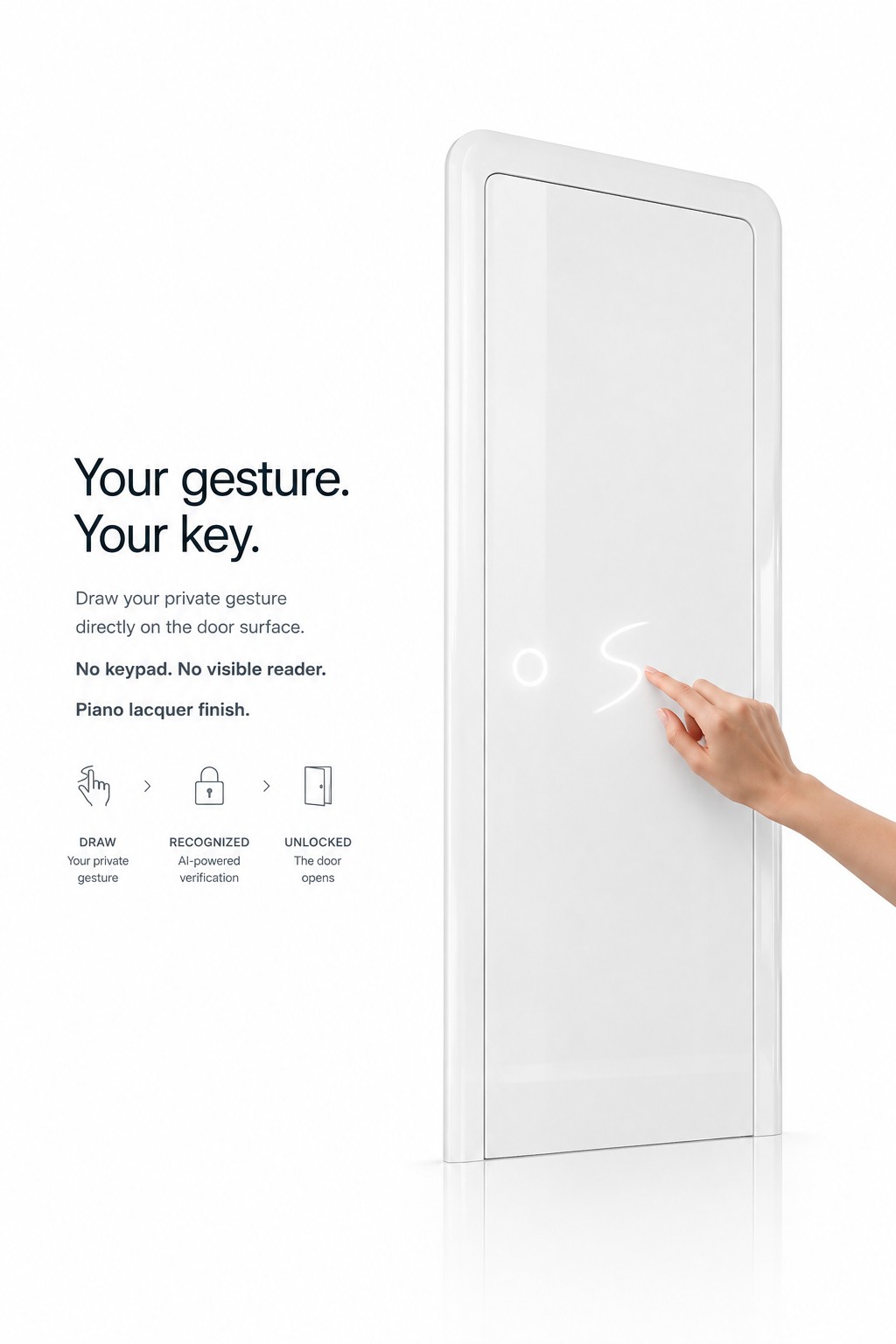
Surface interaction without a conventional visible keypad.
The Doors Dublin approach uses the finished door surface as the interaction zone rather than treating access hardware as a separate visual object. A project may use a simple touch, a deliberate sequence, a directional gesture or a private pattern as part of the user experience. The final access logic, verification method and fallback operation are selected for the actual building and client requirement.
What stays integrated
The door leaf, frame, lock or actuator, sensors, power/data provision, manual release strategy and service access all need to be compatible. The exact concealed arrangement is not published as a universal specification because it changes with the project and forms part of the technical design.
Where it can make sense
High-end residential interiors, private rooms, architectural feature doors and selected controlled-access spaces can benefit when the priority is a minimal visual surface. Safety, emergency egress, regulatory requirements and the intended users always take precedence over appearance.