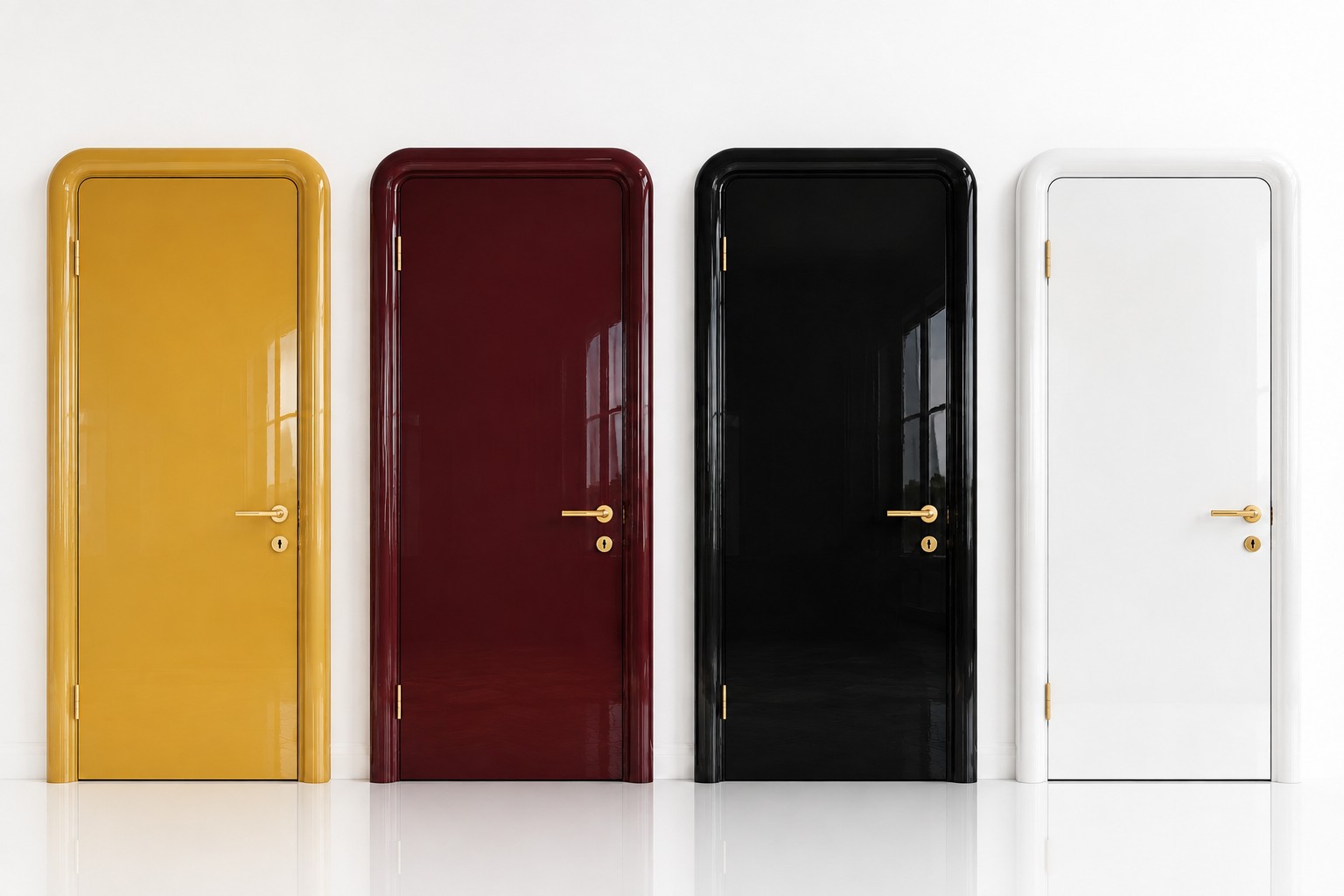
Door Finishes & Materials Dublin
Different door materials need different finishing systems. Doors Dublin connects colour and appearance to the substrate, existing coating, exposure, hardware and maintenance so a finish is chosen for the real door rather than by colour alone.
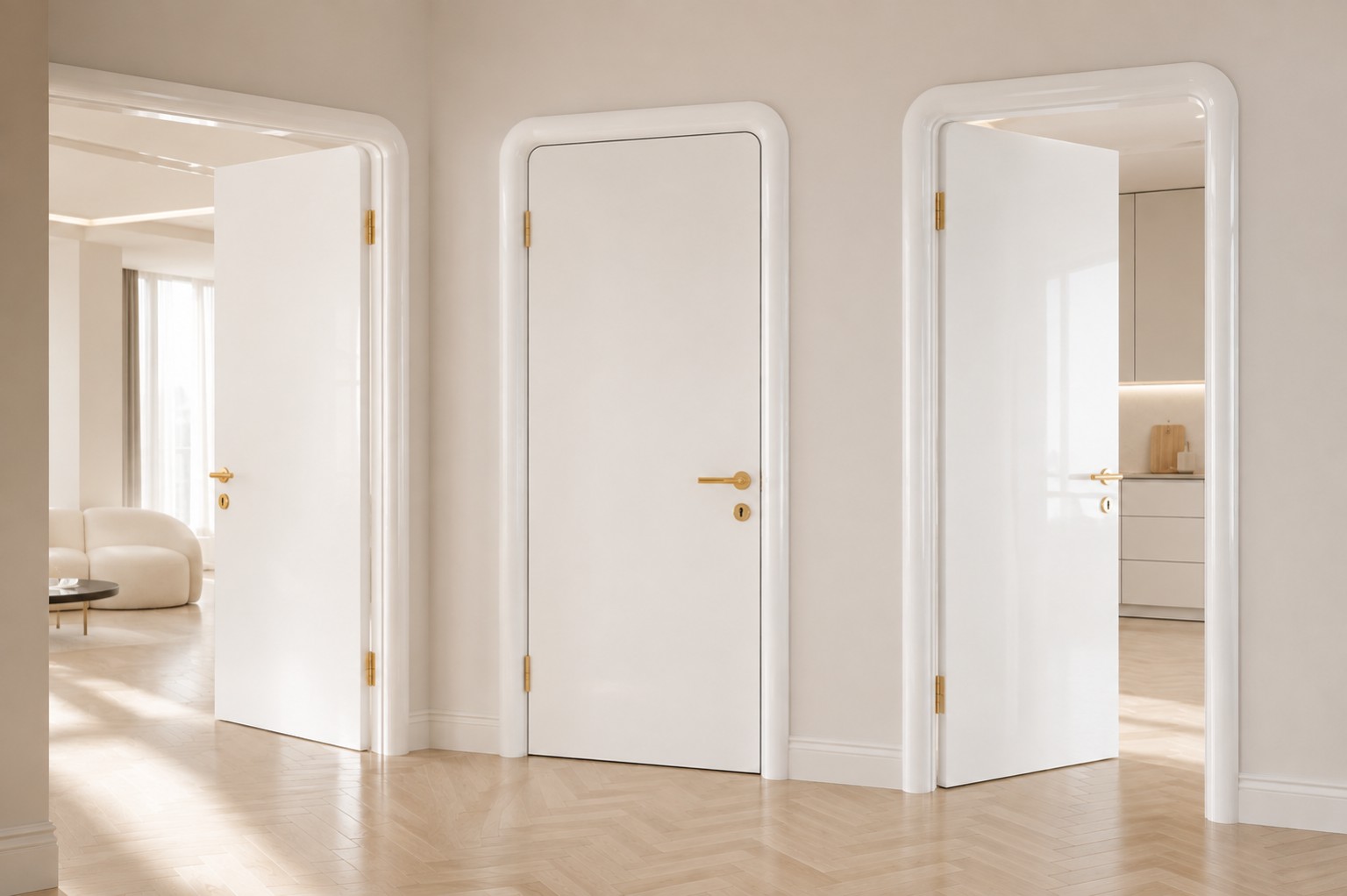
Door Finishes & Materials Dublin
This page is connected to the wider Doors Dublin door range; the image is a visual reference from an existing Doors Dublin collection rather than a fixed specification for every project.
One colour does not mean one paint system
A black door can be timber, MDF, composite, uPVC, aluminium or steel, but those substrates are not prepared or coated in the same way. Adhesion, movement, corrosion, moisture and curing conditions change the correct process.
Furniture-grade MDF
For premium lacquer work, the surface route can include precise machining, repeated filling/preparation, specialist priming, progressive sanding, controlled colour build and lacquer finishing. Exact workshop details remain project-specific.
Timber
Paint, stain, oil and clear lacquer routes need moisture-aware preparation and edge protection.
Composite / uPVC
Specialist substrate-compatible systems are assessed case by case; not every existing surface is a good refinishing candidate.
Aluminium / steel
Powder coating, wet paint and specialist metal systems depend on whether the item is new, removable, already coated, galvanised or exposed to corrosion.
Finish quality starts before the final coat
High-end gloss is created by the flatness and consistency of the prepared substrate as much as by the final lacquer. Doors Dublin treats preparation, correction, clean application conditions and controlled finishing as part of the visual result.
Any colour still needs the right technical route
Bespoke colour can coordinate a door with walls, windows, joinery, hardware and lighting. Samples and gloss level matter because the same colour changes under different light and on different materials.
Choose the finish around the material and the final look.
Internal doors and MDF: painted and lacquered finishes can range from classic white to project-specific colours, with frames and architraves matched or contrasted.
Steel and fabricated metal doors: powder coating is normally the preferred route for a durable, consistent colour finish. RAL-style colour selection can be discussed where the coating system supports it.
Aluminium: powder coating is a strong standard option, while suitable specialist wet-paint or automotive-style systems may be considered for projects requiring a particular visual finish.
Stainless steel: the finish may come from the metal itself through brushing, polishing or a more satin/matt treatment rather than relying on paint. Final suitability always depends on the actual substrate and door system.
For design-led projects, related tones, contrasting colours, inside/outside colour changes and coordinated frame/hardware finishes can all be explored before the final specification is agreed.